Real Estate Information Archive

Blog

Displaying blog entries 381-390 of 435

Nations Continuing Foreclosure Problem

by Liz Warren

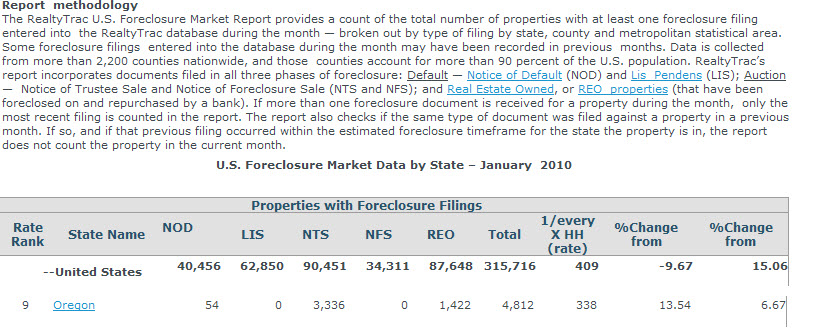
A recent milestone was reach for 2009 and that milestone was one million foreclosures starts to date for 2009. This information is according to the Center for Responsible Lending. They also project that the number could increase to 2.4 million by the end of the year. The Center for Responsible Lending is a non profit policy group.

The Mortgage Bankers Association reports that 9.12% of all mortgage loans at the end of the first quarter were delinquent. This represents a shift away from the subprime loans to prime fixed rate loans. The moratorium on foreclosures over the winter slowed the process down but the unemployment numbers have been increasing causing additional missed payments on mortgages.

On the other hand, four states including California, Florida, Nevada and Arizona account for about 46 percent of foreclosure starts which is driving up the national number. These states represent half of the prime fixed rate foreclosure starts.

Did you know that approximately 10.6 percent of mortgages in Florida are in the process of foreclosure. Nevada is second highest at 7.8%, Arizona is third at 5.6% and California at 5.2%?


Mortgage Changes in the Air

by Liz Warren

Change is in the air with government run Fannie Mae and Freddie Mac. Congress is having a house financial subcommittee start with hearings on how to restructure Fannie and Freddie in the future.

What does this mean to you? Since these two have failed and been taken over and run by the Feds the entire process is in for an overhaul. 

Fannie and Freddie have written the book and dominated the real estate market for decades on down payments, credit score requirements, loan amounts and underwriting standards. New rules will literally change these requirements and dictate what interest rates you will be eligible for.

Some theories suggest they morf into one unit. It's possible they could also help the jumbo and commercial markets with loans since these areas currently have no where to go to get money causing many problems in these areas.

If I hear any additional rumblings about where this is headed I'll include them in this blog.

Mortgage Delinquencies on Rise?

by Liz Warren

Are Mt. Hood mortgage delinquencies on rise? Well, yes according to the Mortgage Bankers Association. In fact, since keeping track since 1972, last quarter was the highest first quarter of delinquencies since records have been kept.

Unemployment and continued area job losses make mortgage payments difficult to meet. Although some reports say Oregon will see some job stability in the fourth quarter of 2009, most of the country is predicted to continue with higher unemployment well into 2010.

Top off the unemployment rates with increased foreclosure rates and the reset of subprimes coming up in '09 and '10 we should see more aftermath of bad loans impacting area homeowners.

Nationally one in ten of homeowners are in trouble with their loans. This seems to be a cascading effect that is inescapable if you have borrowed to the max or taken out home equity loans.

Stay tuned for the impact these events will have on the Mt. Hood market. So far the hardest hit area appears to be Government Camp. Not only did this area escalate in pricing at breakneck speed, like Bend, this market will take a very hard hit adjusting to current market conditions.

Employment Rebound in 4th Quarter?

by Liz Warren

According to Moody's Economy.com there are five states which are poised to start an employment rebound in the fourth quarter of 2009. Their prediction is that Oregon will be one of those states. This would be great news since we are 2nd in the nation for unemployment. Our recession began in August of 2008 according to their numbers.

Lenders Can Use Your Tax Credit!

by Liz Warren

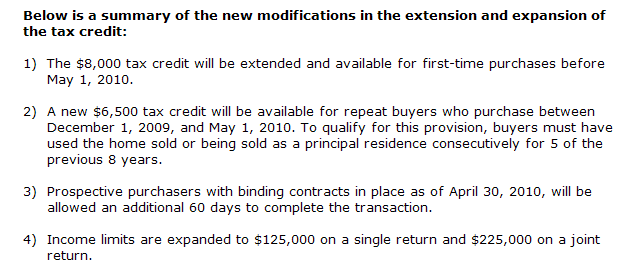
The new regulations helping first time home buyers use their tax credits to purchase should give a breakthrogh for buyers in the Welches, Rhododendron and Brightwood areas. FHA loans require 3.5% for a downpayment. Lenders can tap the $8,000 tax credit to help with this downpayment. Lenders can get paid direct from the IRS when the buyer files and uses this credit! This should take the stall out from many buyers sitting on the fence without the actual cash to move forward. See the letter from HUD which you can down load here.

New Hud info on Tax Credit for Mt. Hood Buyers

by Liz Warren

Here is the lastest info for you to download concerning the $8,000 tax credit. Take advantage of this opportunity today!

Click here to download

Call or email me now for area homes this program will work for. Selection is fantastic! Homes in Brightwood, Rhododendron and Welches will qualify!

Call me now at 503-705-3090!

FHA 203K loans on Mt. Hood

by Liz Warren

Home renovations can be daunting, but financing them doesn’t need to be. Homebuyers considering a fixer-upper and homeowners thinking about doing major rehab work might want to consider an FHA 203K loan.

Often called rehab or renovation loans

, 203K loans differ from traditional mortgage loans. Buyers who want to purchase a home in need of repair usually have to secure a loan to buy the property, get additional financing to complete the renovation and then get a permanent mortgage to pay off the interim loans. 203K loans, however, are made based on the after-repair value and include an escrow account, in which the money is dispersed in draws as the necessary renovations are being completed.

Renovation loans can be used in three ways: to purchase an existing home (and the land attached to it) and renovate it; to pay off existing debt on a current residence and renovate it; or to purchase an existing property and move it to a new piece of land. The types of improvements allowed on 203K loans are extensive — painting, room additions, decks, bathroom and kitchen remodels, and even going green. Luxury items and improvements are generally not eligible.


Homebuyers need to work closely with their REALTOR®  as well as a contractor to get a detailed statement about the extent and general cost of the rehab work and the expected market value of the property after the completion of the work. After finding a HUD-approved lender — not all banks administer these loans — and inspections and appraisals, the work can begin. For more information, go to www.hud.gov .

Eye Opener

by Liz Warren

Yahoo Finance had a reportfrom Zillow and it's a big eye opener. Unlike the Case-Shiller Home Price Indices that use 20 metro areas, Zillow takes a wider swipe and uses a much greater pool of data with 160 plus metro areas. Here are some of the highlights of the article.

Around 20% of homeowners in the US. owe more than the current market value of their homes. 

Over the past twelve months,  20.4% of home sales were foreclosures and nearly 12% were short sales.

Home values declined from 3rd quarter 08 to first quarter 09 by 3%.

From one year ago values have dropped 14% in the entire US.

Many areas have seen a 50% or more drop over the past five years such as areas of Florida, Phoenix, Stockton and Modesto.

Over the past five years 85 of 161 metro areas have seen no change or negative values from 2004.

About one third of potential sellers will place their homes on the market if they see any sign of an improved market for real estate.

If this one third place their homes on the market, naturally, that will extend the recovery and continue to supress prices.

To sell in today's market you must be agressive and realistic in pricing your property to sell.

If you need to sell today, give me a call for market knowledge and an agressive marketing plan.

Will FHA loans be the next sub-prime?

by Liz Warren

Could it be that FHA and USDA loans will create the next sub-prime loan mess? Both of these loans are 100% government backed and guaranteed.

Currently, nearly one in three of all new mortgages are FHA and in Oregon, where 99% of homes qualify for the USDA loan, according to a seminar I went to with their representative, it looks a bit scary. Why does it look scary to me, well, FHA and USDA loans have very low downpayments and high risk borrowers.

One source, the Mortgage Bankers Association, tells us that 7.5% of new FHA loans are in serious delinquency. Serious Delinquency means the mortgage is at a minimum three months over due. One in eight FHA loans are delinquent-recently missed a payment. this is about three times the rate for conventional loans.

What does this mean? Hopefully, not another government bail out down the road. There's no doubt about it, buyers need loans to purchase homes but not at the expense of creating yet another problem!

Credit Score Impact of foreclosures, Bankruptcy, and Short Sales


What does a foreclosure, bankruptcy, deed in lieu or short sale do to your credit score?


Foreclosure, or a Deed in Lieu, which has the same effect as a "foreclosure" will drop your credit score between 200 and 300 points.


If you have a Notice of Default (NOD)-a foreclosure is started- this will be reported to credit agencies as a foreclosure in process and it will show up as a foreclosure for credit scores. This will be a 200-300 point hit also.


A mortgage broker in southern California, Catherine Coy said. "The effect on a consumer's credit report -- foreclosure vs. short sale -- is the difference between being hit by a train or a bus," in speaking about borrowers who are a few months in arrears.

What about buying a home again?


Foreclosure will cause a three to five year wait for a new loan.


Bankruptcy is now a four year wait for a new loan.


For a short sale, best case is getting your short sale classified as “settled” from your lender. You may be able to get a loan in two years vs. four years.


This table shows how your credit score impacts the interest rate you receive on a mortgage:


For more info on how credit and credit scores are determined, download a pamphlet here taken directly from www.myfico.com so you can understand how credit works and what you can do to improve your scores.

Displaying blog entries 381-390 of 435

Syndication

Categories

Archives